
Theodora de Jasay MVetPhys
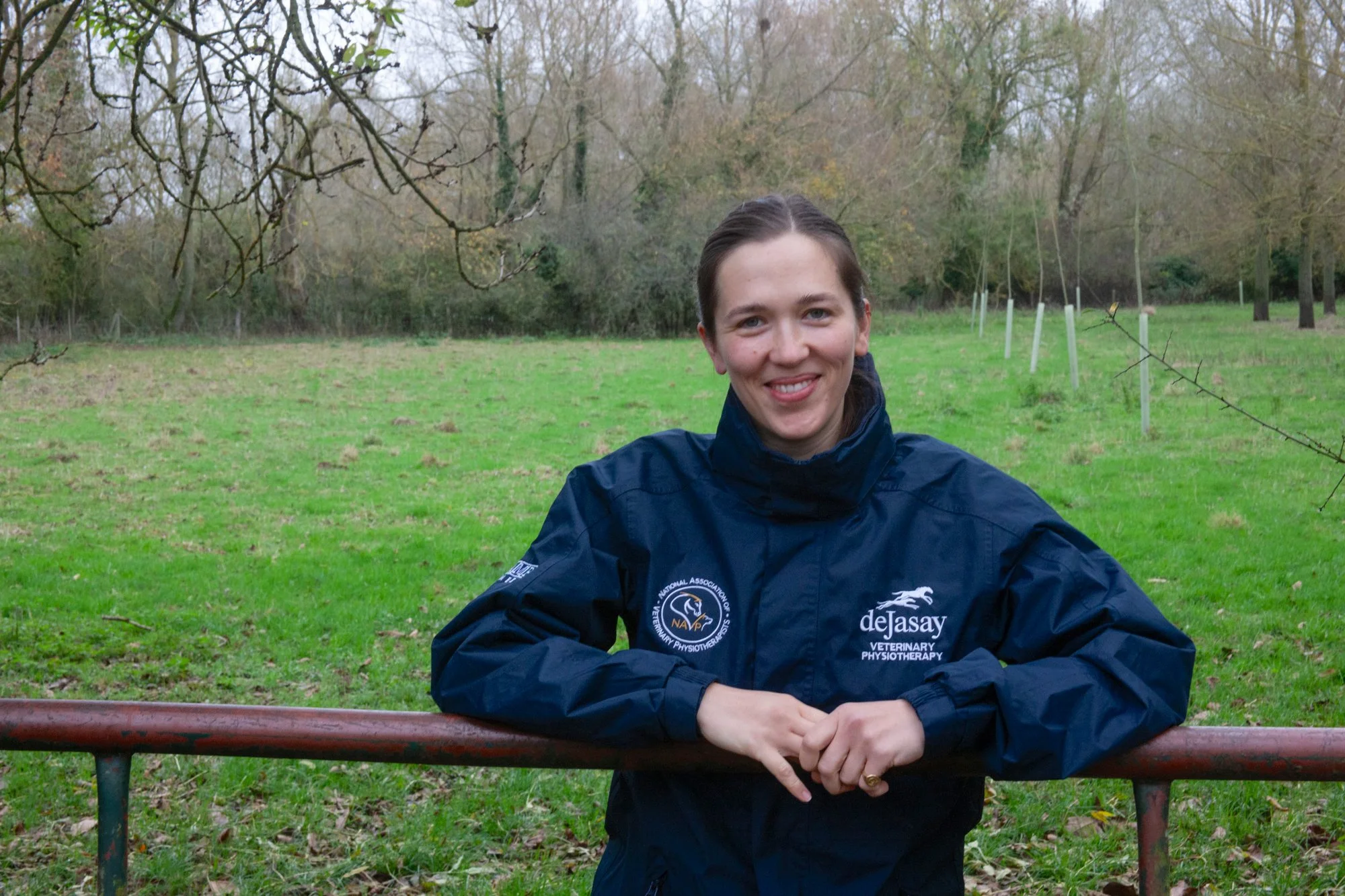
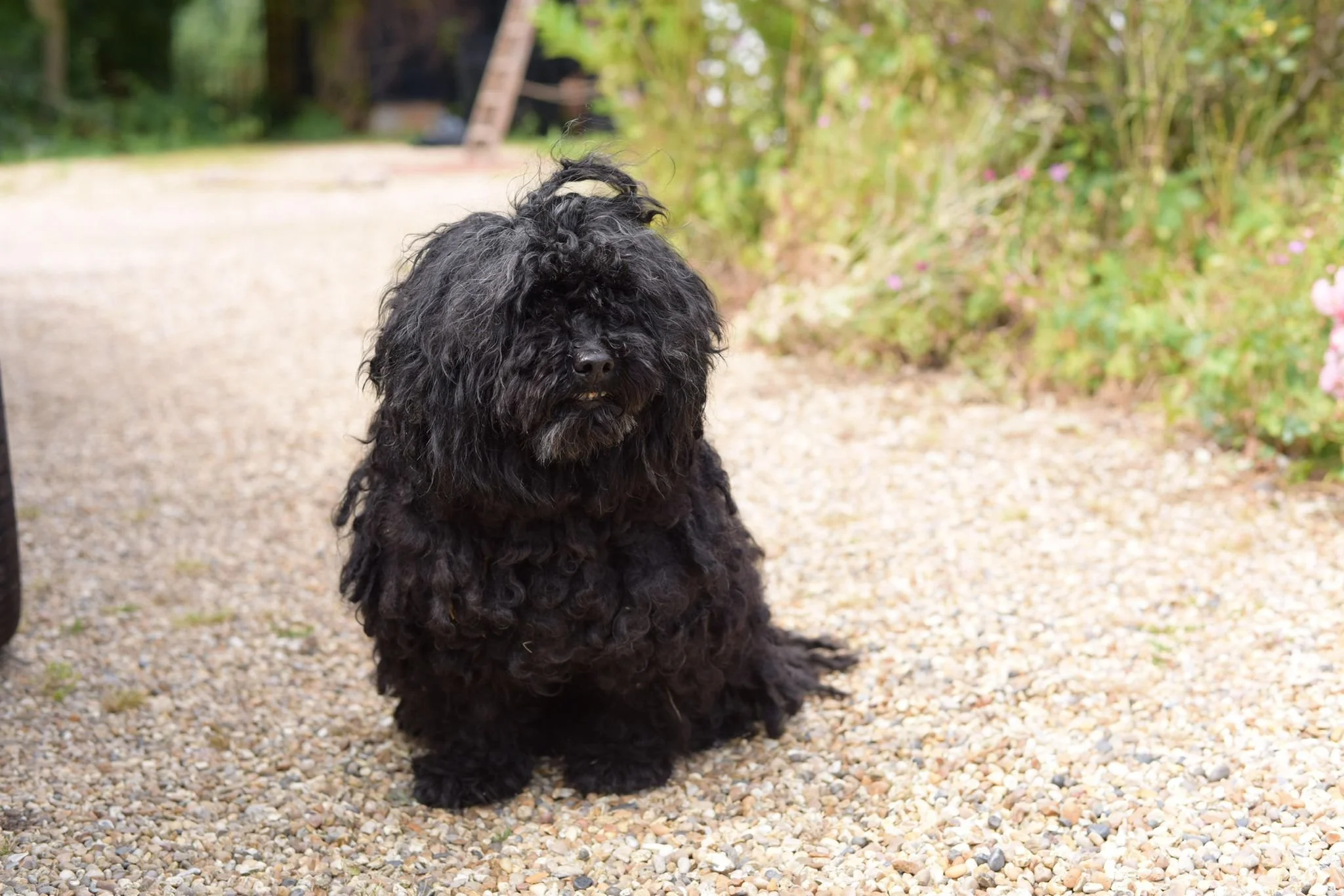
I’ve had a lifelong love of animals, and considered training in veterinary medicine when leaving school, but ultimately took a different route with my first degree. I worked in production for a number of years, but always felt a pull towards working to help animals. An experience involving my childhood dog Juli (pictured snaggle tooth and all) cemented my decision to retrain.
At seventeen she suffered a bout of Idiopathic Vestibular Syndrome: a condition affecting the middle ear and the neurological apparatus responsible for balance, coordination, and position sense. Her vet-led treatment focussed on supportive care and symptom management while the problem resolved over a few weeks.
At home, managing her environment with non-slip matts, providing sling support while building up her walking, helping correct her posture to improve her body position sense, and using massage to reduce tension all supported her recovery and improved her quality of life. Being part of that process highlighted veterinary physiotherapy’s value to me.
I completed my four-year Integrated Masters’ in Veterinary Physiotherapy - achieving a distinction - qualifying me to join professional registers like RAMP and NAVP, and work on referral from your vet. My dissertation research into veterinarian’s recommendations around physiotherapy during treatment of canine cranial cruciate ligament disease was awarded the Best MSc Research Award: awarded to the highest mark for an MSc dissertation in the faculty of Agriculture, Animal and Environmental Sciences. I make evidence-based, clinically reasoned decisions to support vets’ treatment of orthopaedic, neurological or soft tissue injuries, help manage chronic conditions like osteoarthritis, or aid enhancement of athletic animals’ performance and injury risk reduction.
I split my practice between seeing my own equine and canine clients in London and the surrounding counties, and working as part of the team at a busy canine clinic where all manner of lovely dogs come for rehabilitation. When my schedule allows it, I volunteer at Penniwells RDA Centre - a fantastic charity that’s been providing people of all disability opportunities to learn about horses, their management, and riding them since 1980.
Future plans and professional development
Continuous professional development (CPD) is more than just a requirement of my memberships with professional bodies. There is always more to know, and I firmly believe that seeking opportunities to learn from research, structured courses, mentors and other professionals is essential to giving the best care possible to my patients.
Most-recently I was able to watch lectures from the NAVP 2025 Conference, including those by Daryll Millis on the evidence for therapeutic exercise selection for small animals, and for the use of therapeutic LASER therapy in veterinary physiotherapy. I also spent a day training in Equine positional releases and muscle energy techniques, which can be applied to canine patients too. Positional release can be particularly useful for patients who are more sensitive, or are guarding specific areas: it works by moving their bodies in the direction of least discomfort and resistance, helping build their trust.
In April undertook training in animal acupressure, I was amazed by how visibly the animals we treated responded, and how effective the technique was in helping them release tension. This research paper by Chinn et al. (2025) provides some background on acupoint therapies if you’d like to learn more. I’m currently completing an internship at the Equine Functional Motion Centre in the Netherlands, learning from the professionals there and their approach to Sport Horse management and rehabilitation. I can’t wait to bring what I learn into my practice when I return this November.